Who Made It?
Look for the creator, publisher, date, and intended audience.
PRIMARY SOURCES & THE COLLECTION
Newspapers, magazines, books, maps, and artefacts invite us to examine the evidence—and the stories people choose to tell.
Start with a detail. A headline. A date. A mark on a map. Select any image to open the full photograph.
45 PHOTOGRAPHS · FROM OUR COLLECTION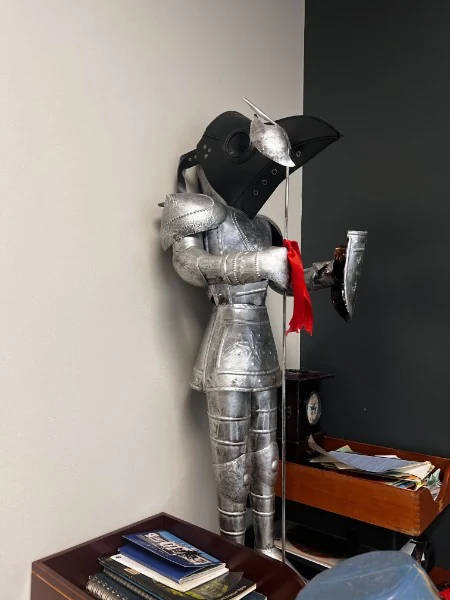
Sir Southeast wearing a plague mask.
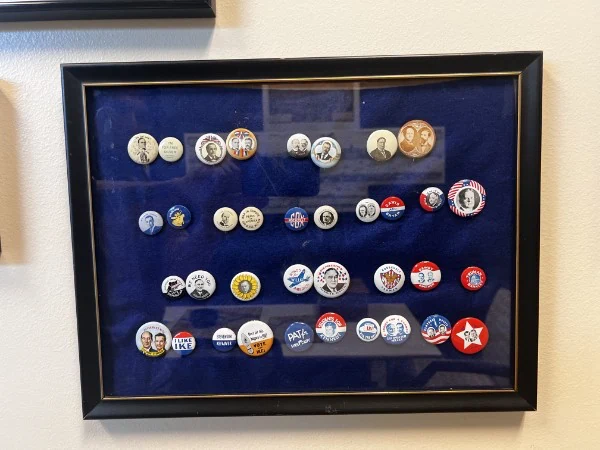
Political pins.
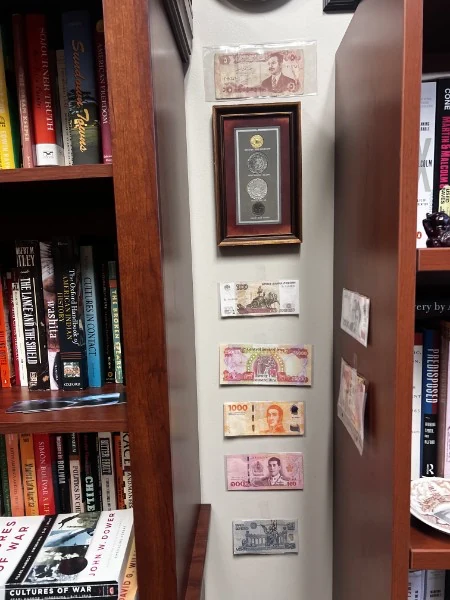
Money from around the world.
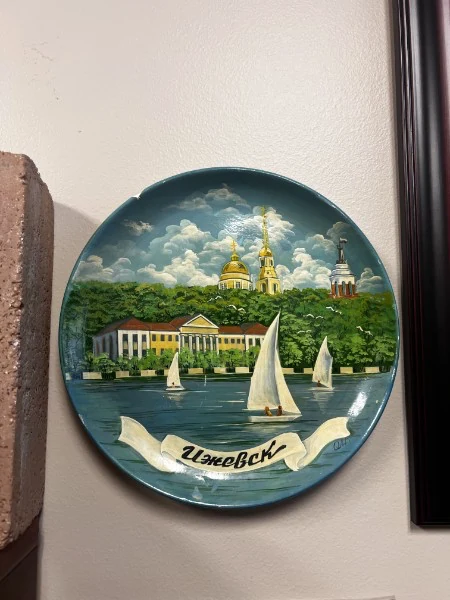
A plate from Russia.
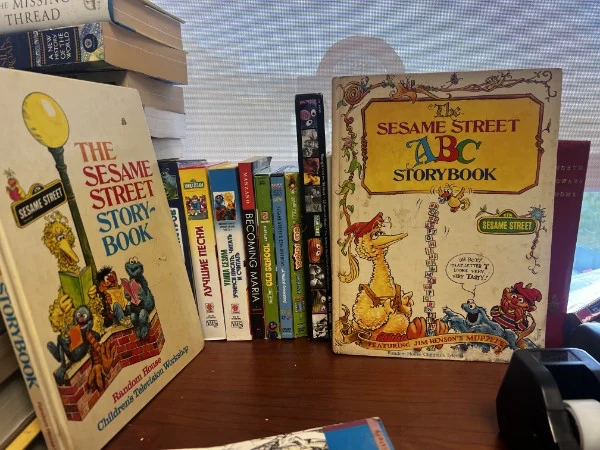
From the Sesame Street archives.
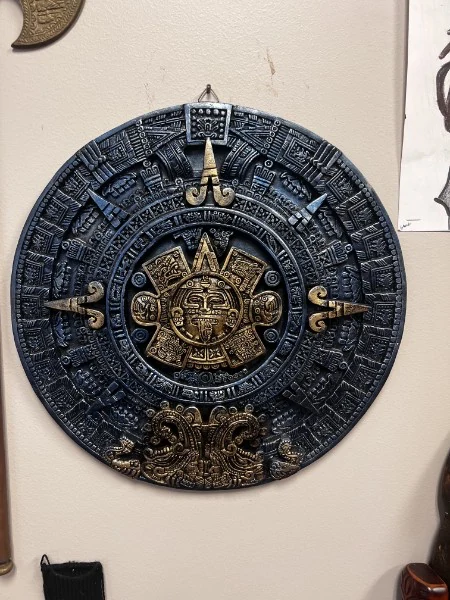
Aztec calendar.
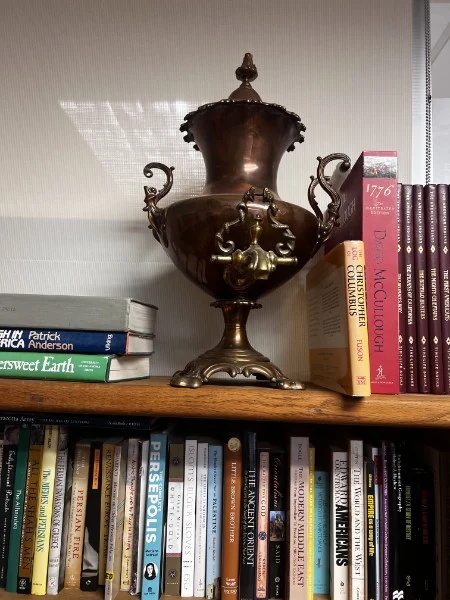
A samovar.
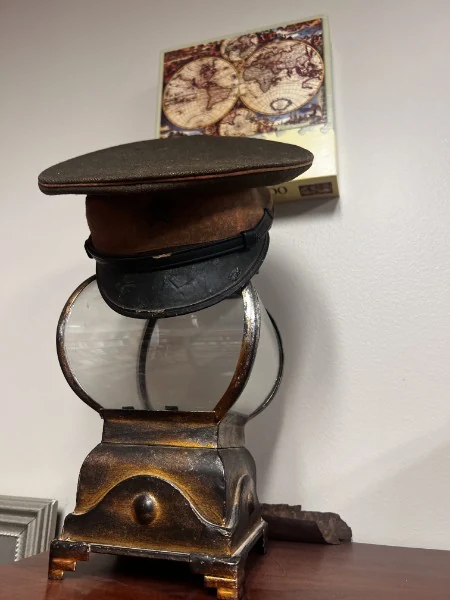
World War II Japanese uniform hat.
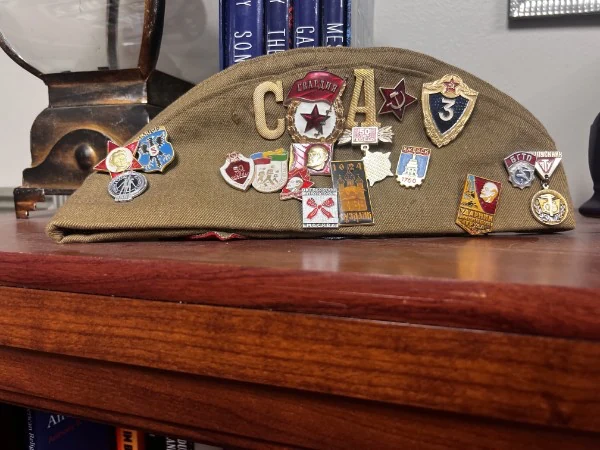
Hat from Russia with Soviet pins.
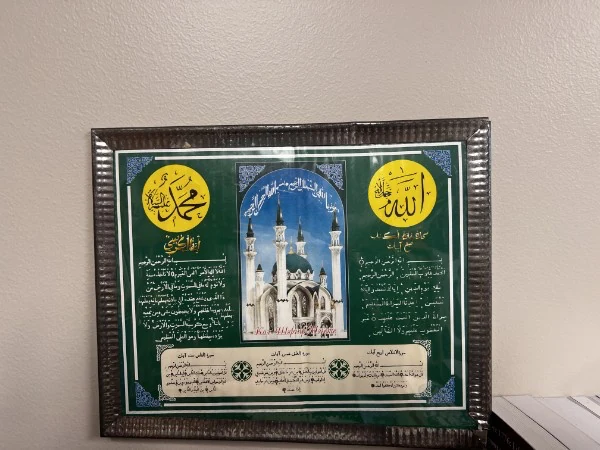
Islamic literature from a Russian Tatar.
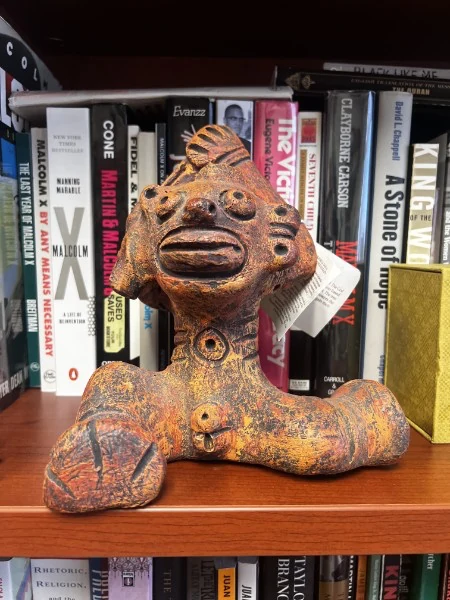
A Taíno sculpture of the God of Strength.
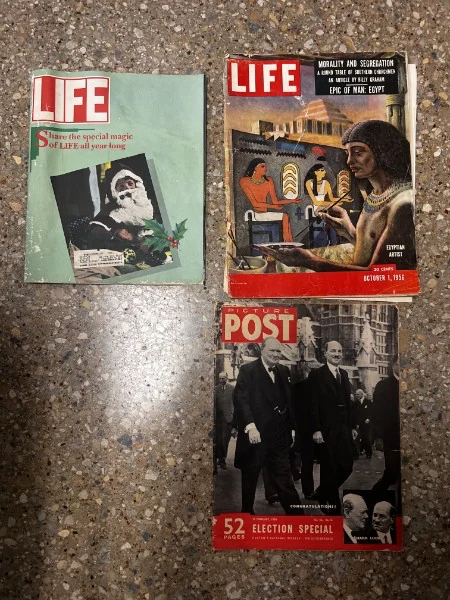
LIFE magazines.
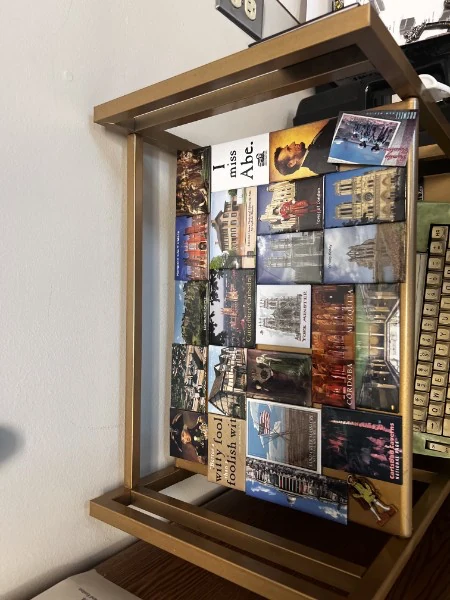
Historical magnets from around the world.
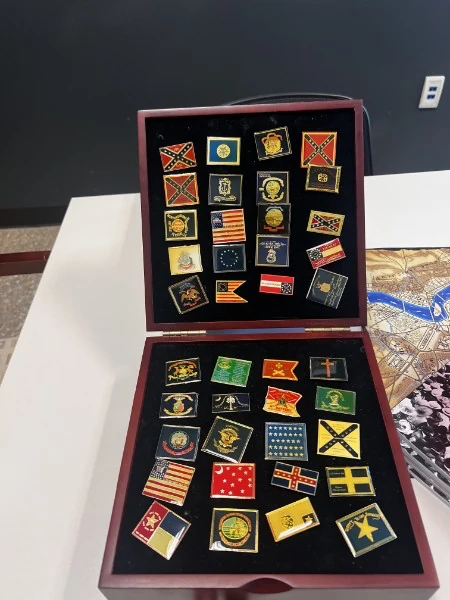
Battle flag pins collection from the US Civil War.
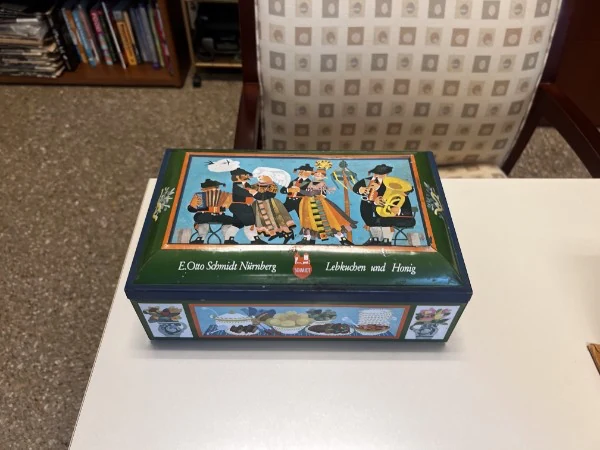
A tin box from Germany.
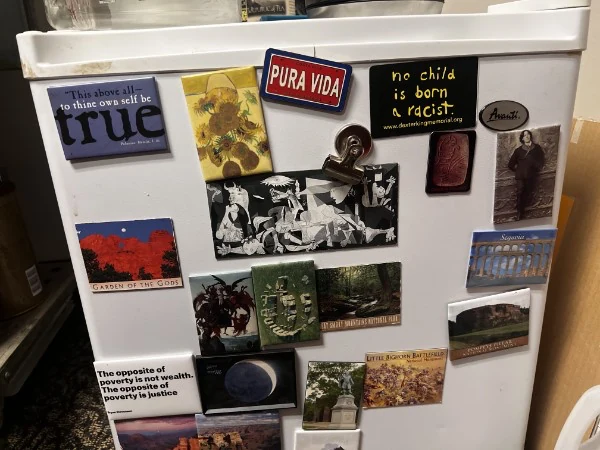
More historical magnets.
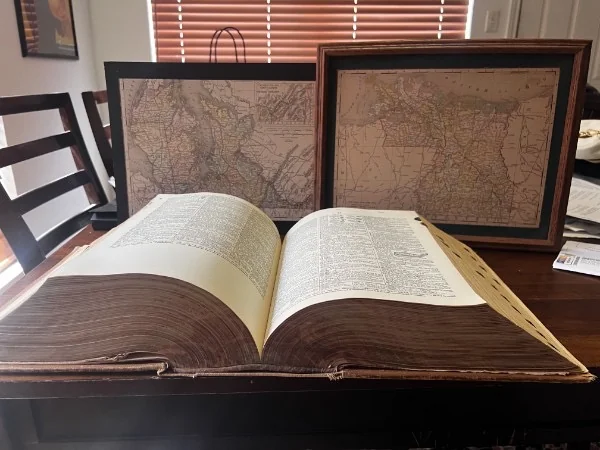
An open dictionary and framed maps arranged on a table.
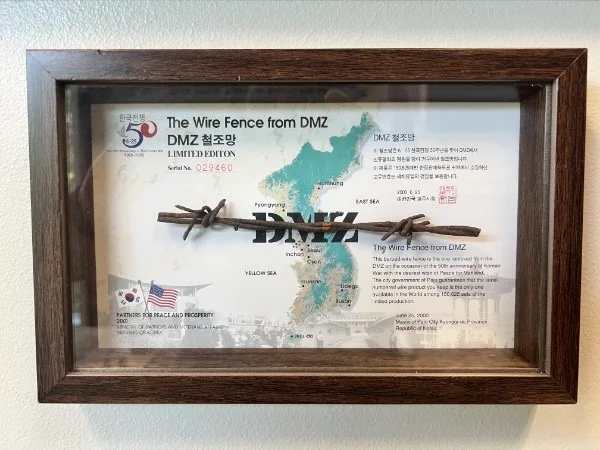
A framed display labeled “The Wire Fence from DMZ,” with a wire fragment and map.
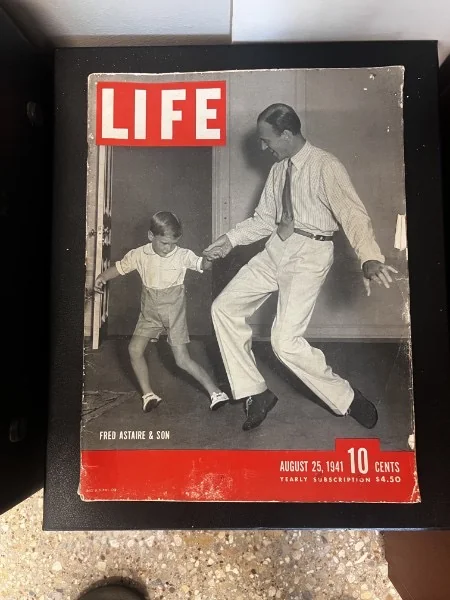
A LIFE magazine cover featuring Fred Astaire and his son, dated August 25, 1941.
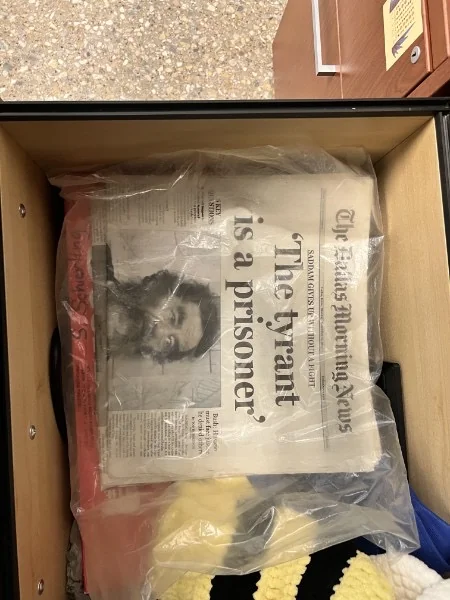
A Dallas Morning News front page with the headline “The tyrant is a prisoner.”
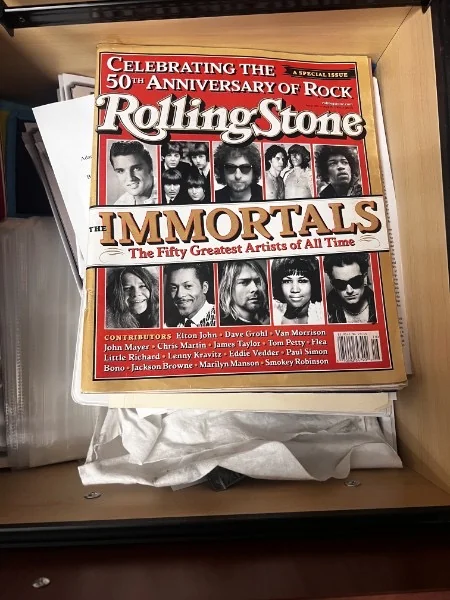
A Rolling Stone “Immortals” cover in the collection.
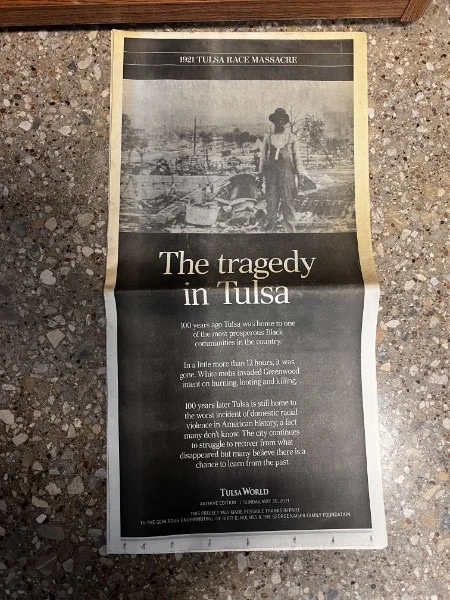
A Tulsa World retrospective on the 1921 Tulsa Race Massacre. This is a commemorative publication, not a newspaper printed in 1921.
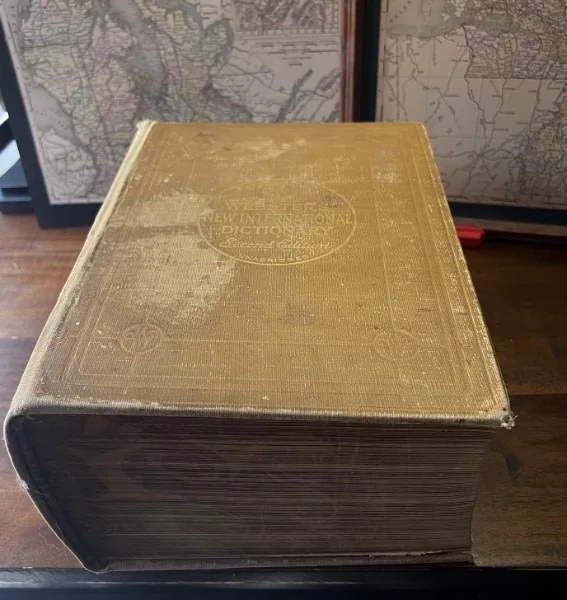
Webster’s New International Dictionary displayed in front of framed maps.
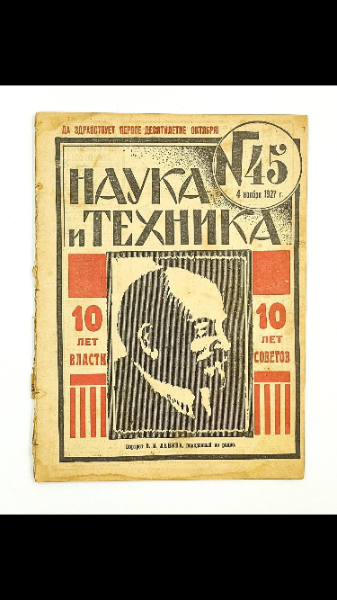
A Cyrillic-language science and technology magazine cover.
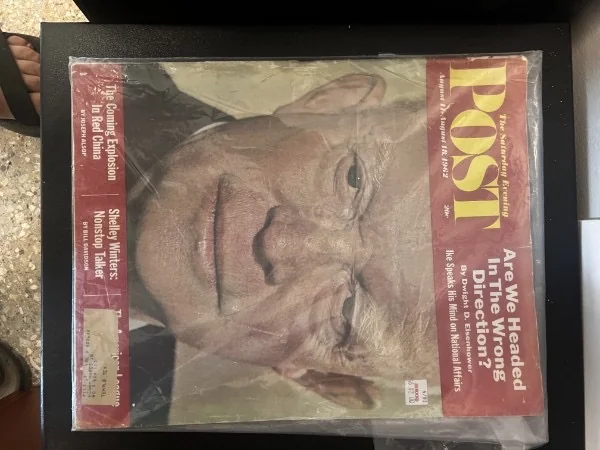
A Saturday Evening Post cover preserved in a sleeve.
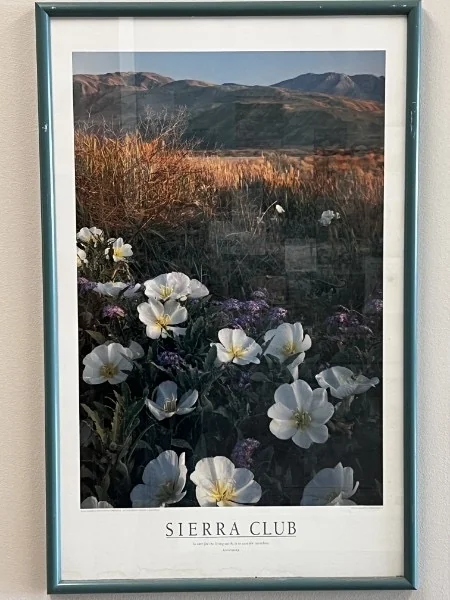
A Sierra Club conservation poster in the collection.
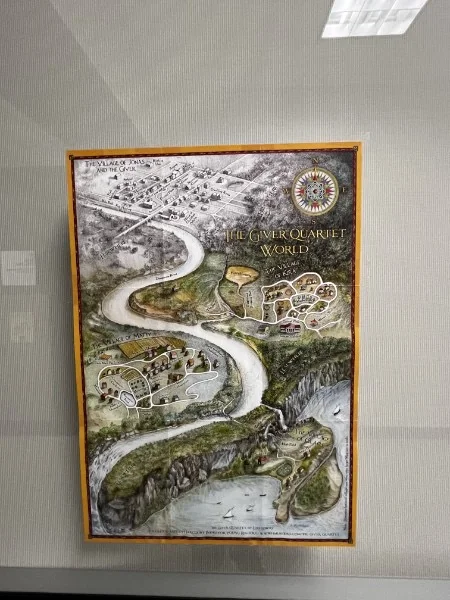
“The Giver Quartet World,” a literary map.
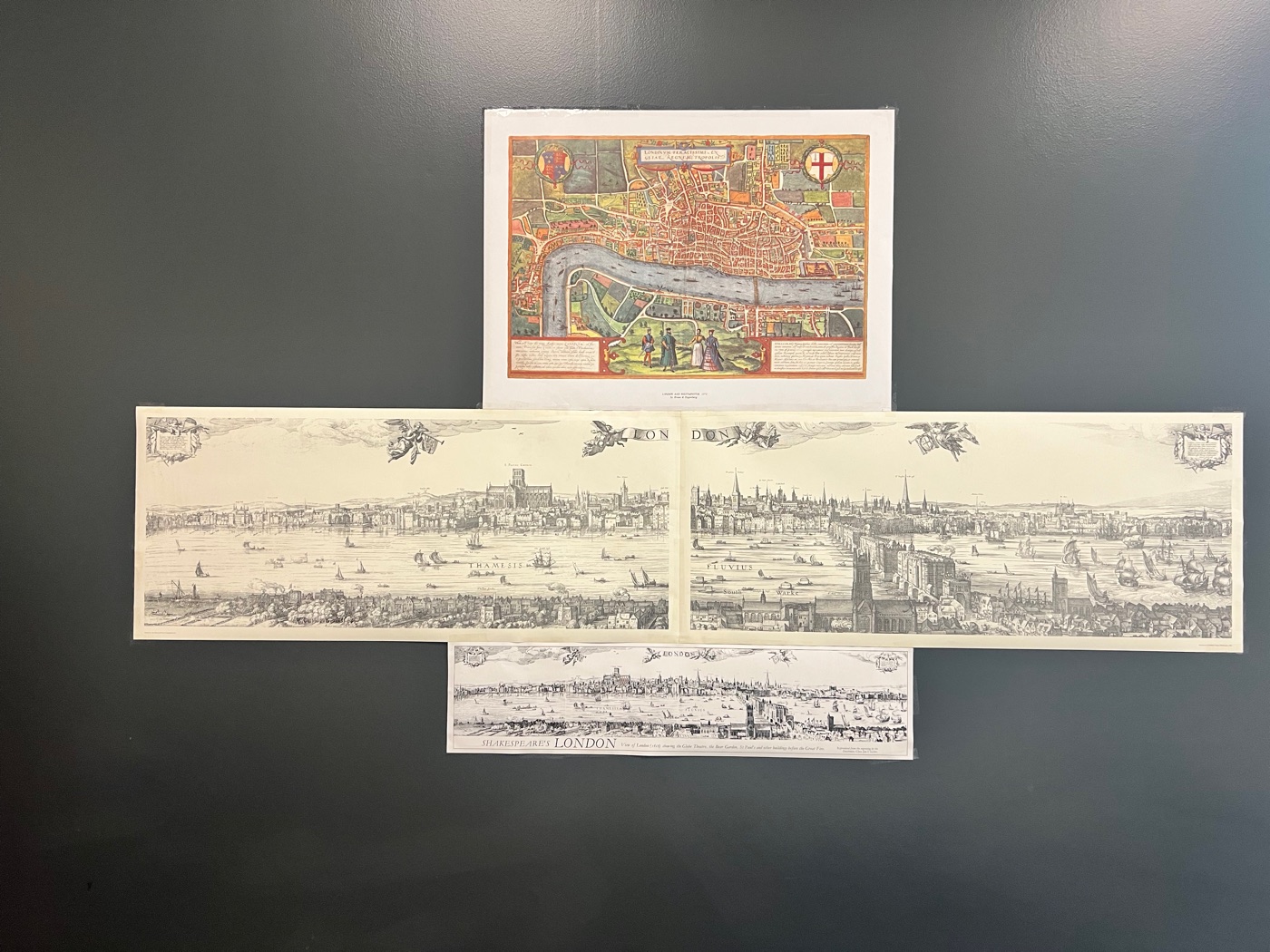
Historical maps and city views displayed at the Center for History and Culture.
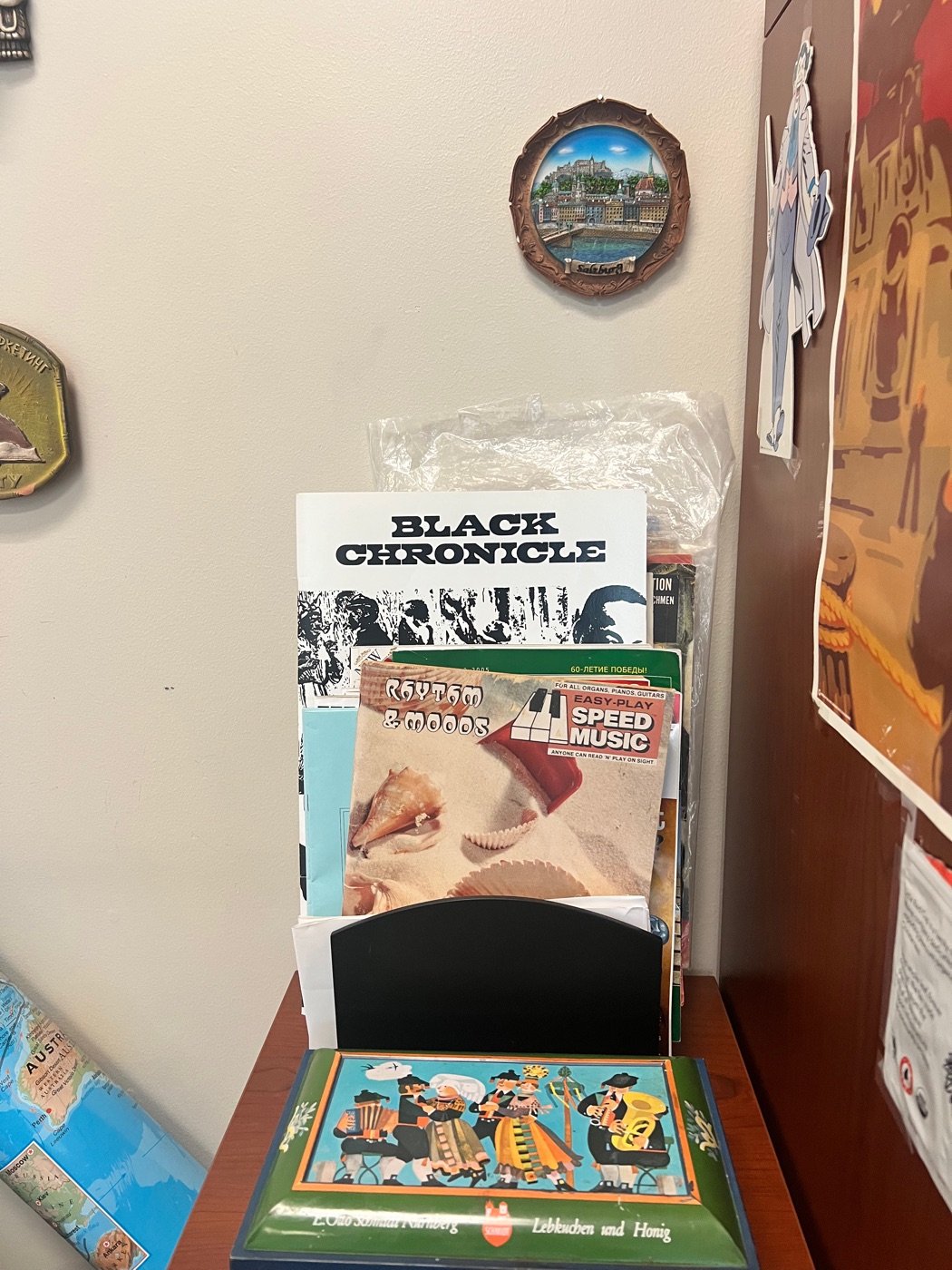
A Black Chronicle display at the Center for History and Culture.
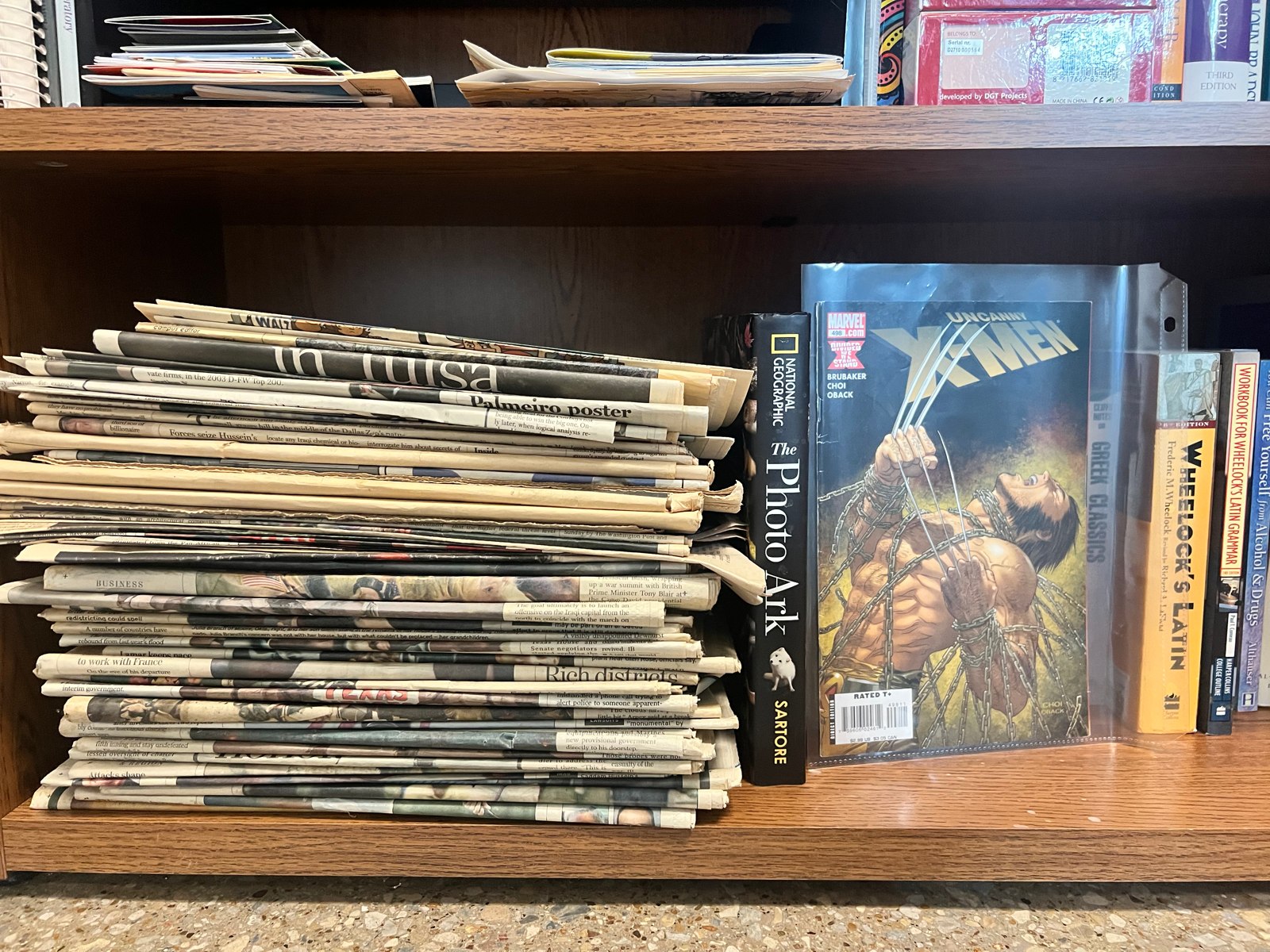
A stack of newspapers and periodicals beside books on a shelf in the Center.
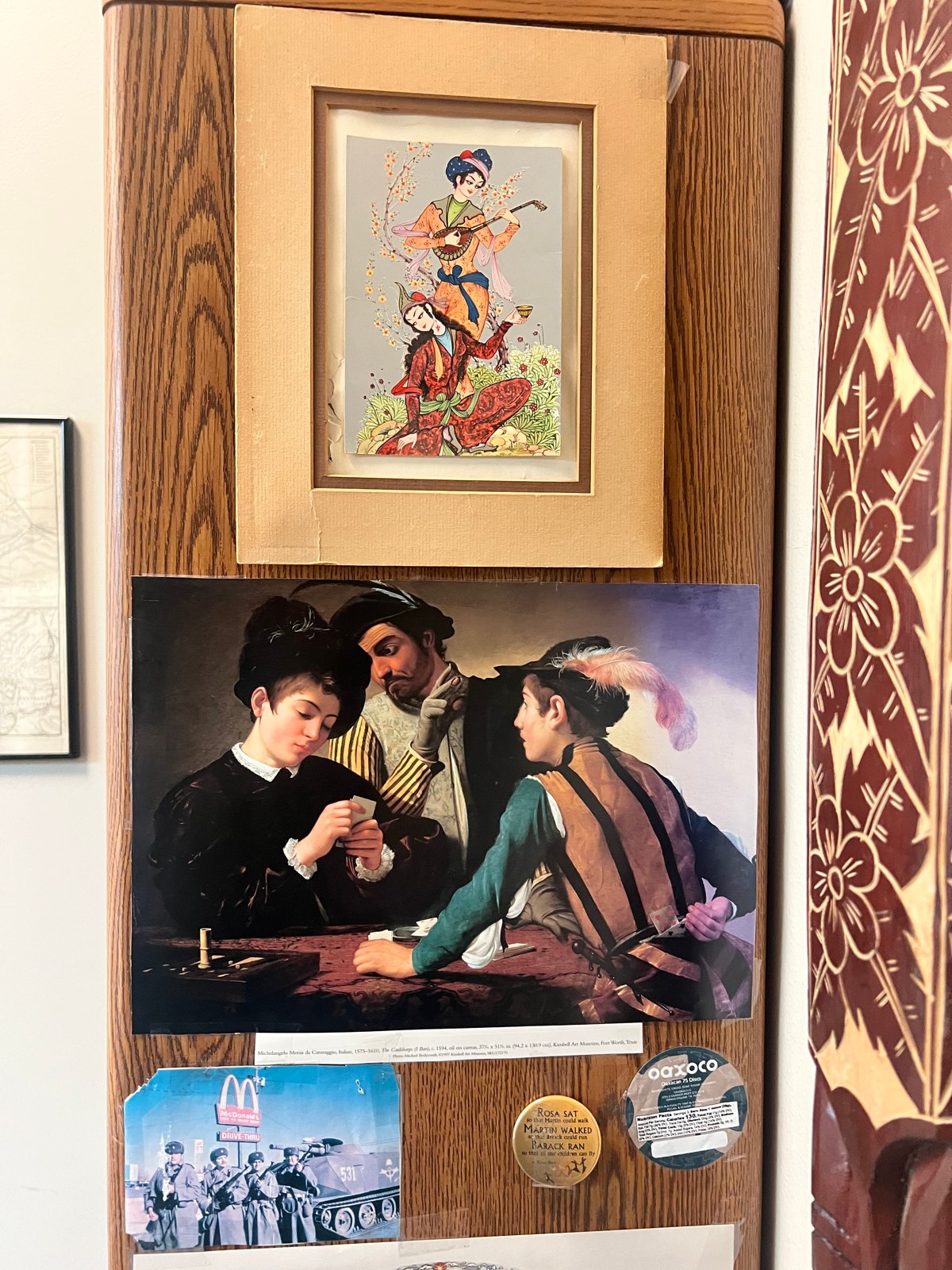
Art reproductions and a framed picture displayed beside a patterned hanging in the Center.
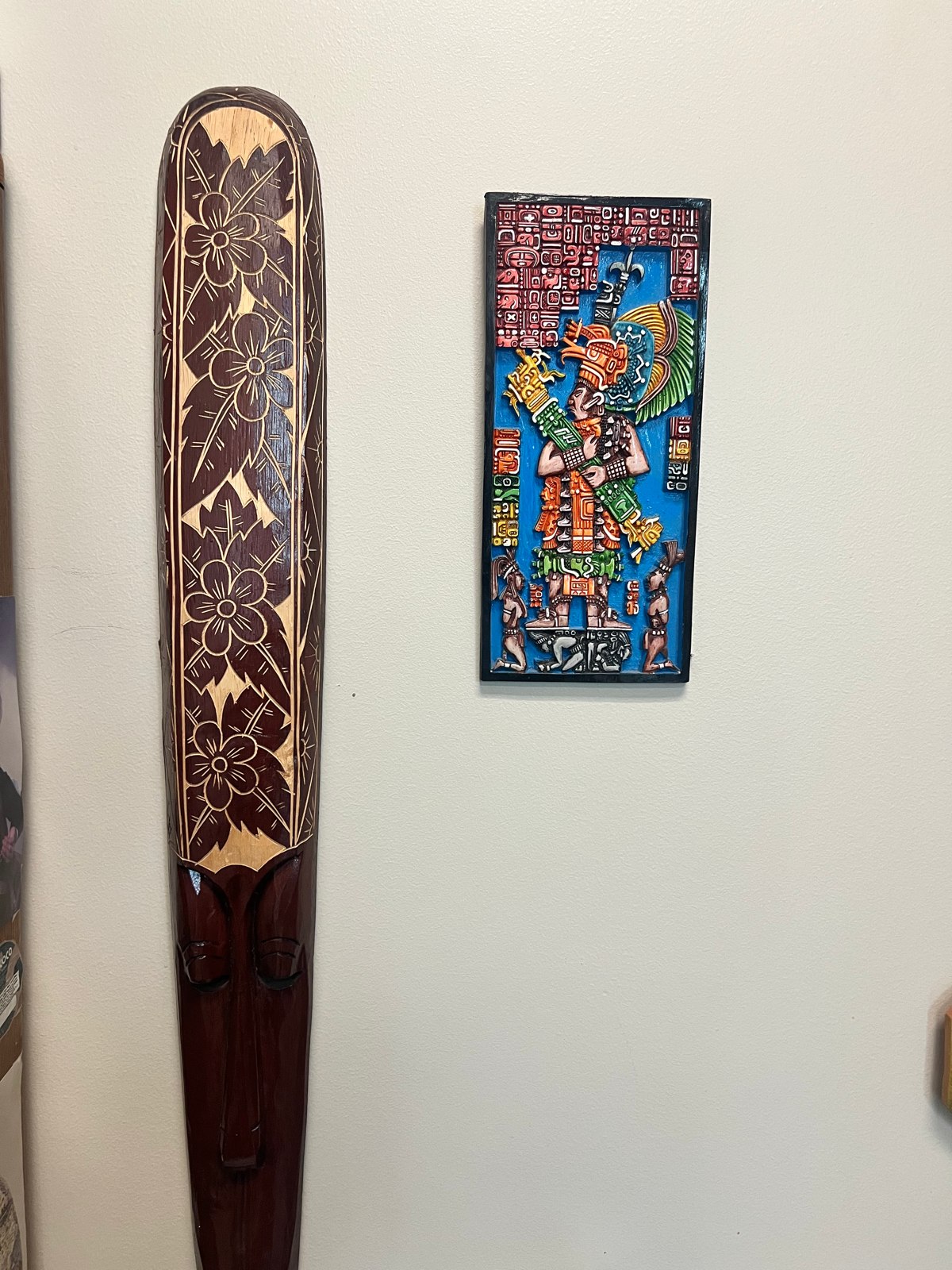
A long decorated wooden artefact and a colorful rectangular artwork displayed on a wall.
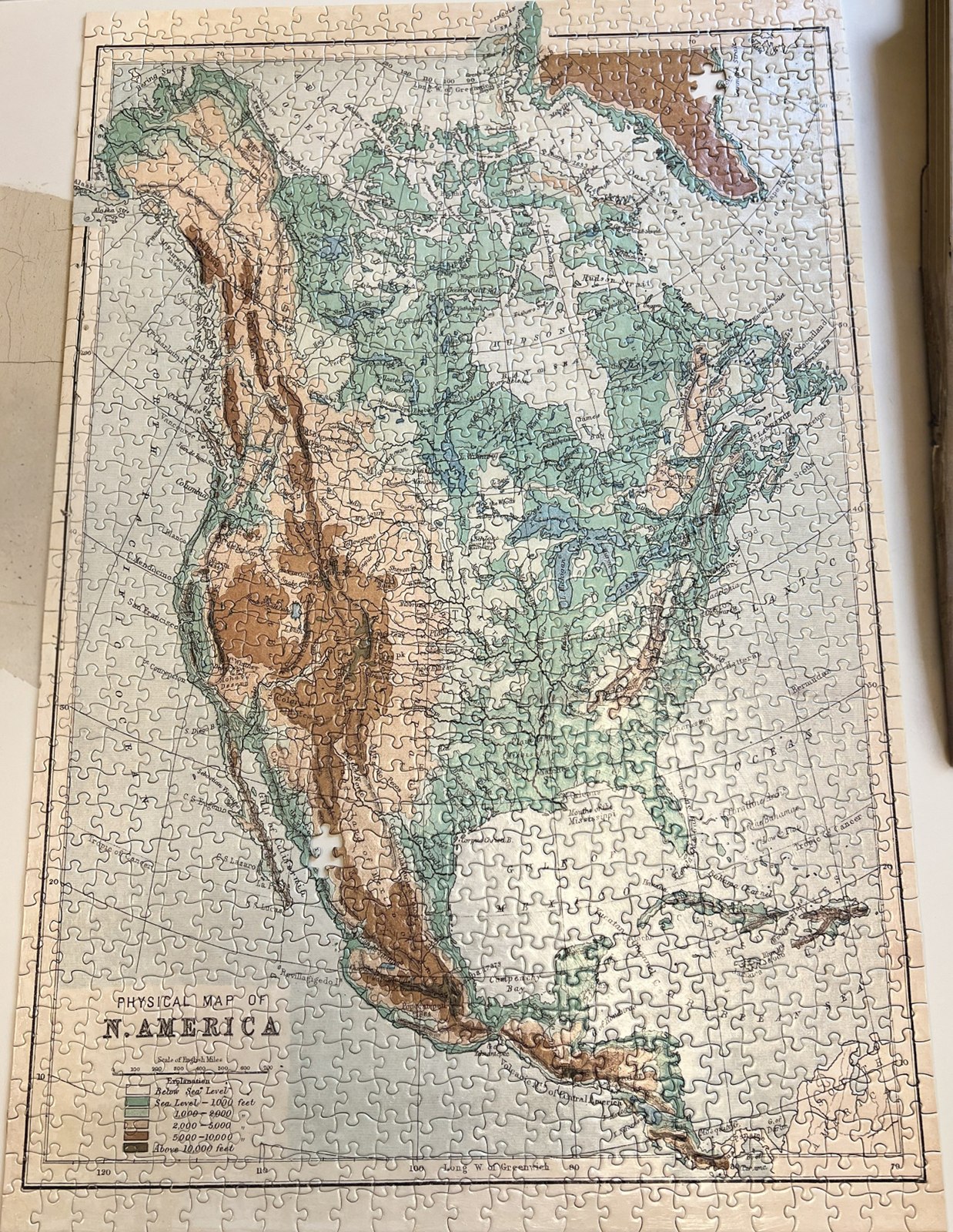
A framed puzzle depicting a map of North America.
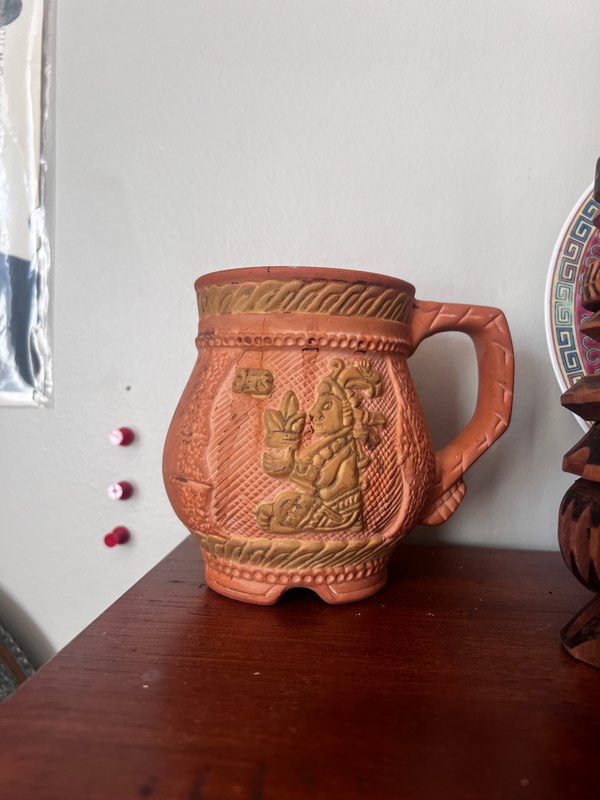
A decorated cup pictured on the original Center page under the label “Cacao Cup.”
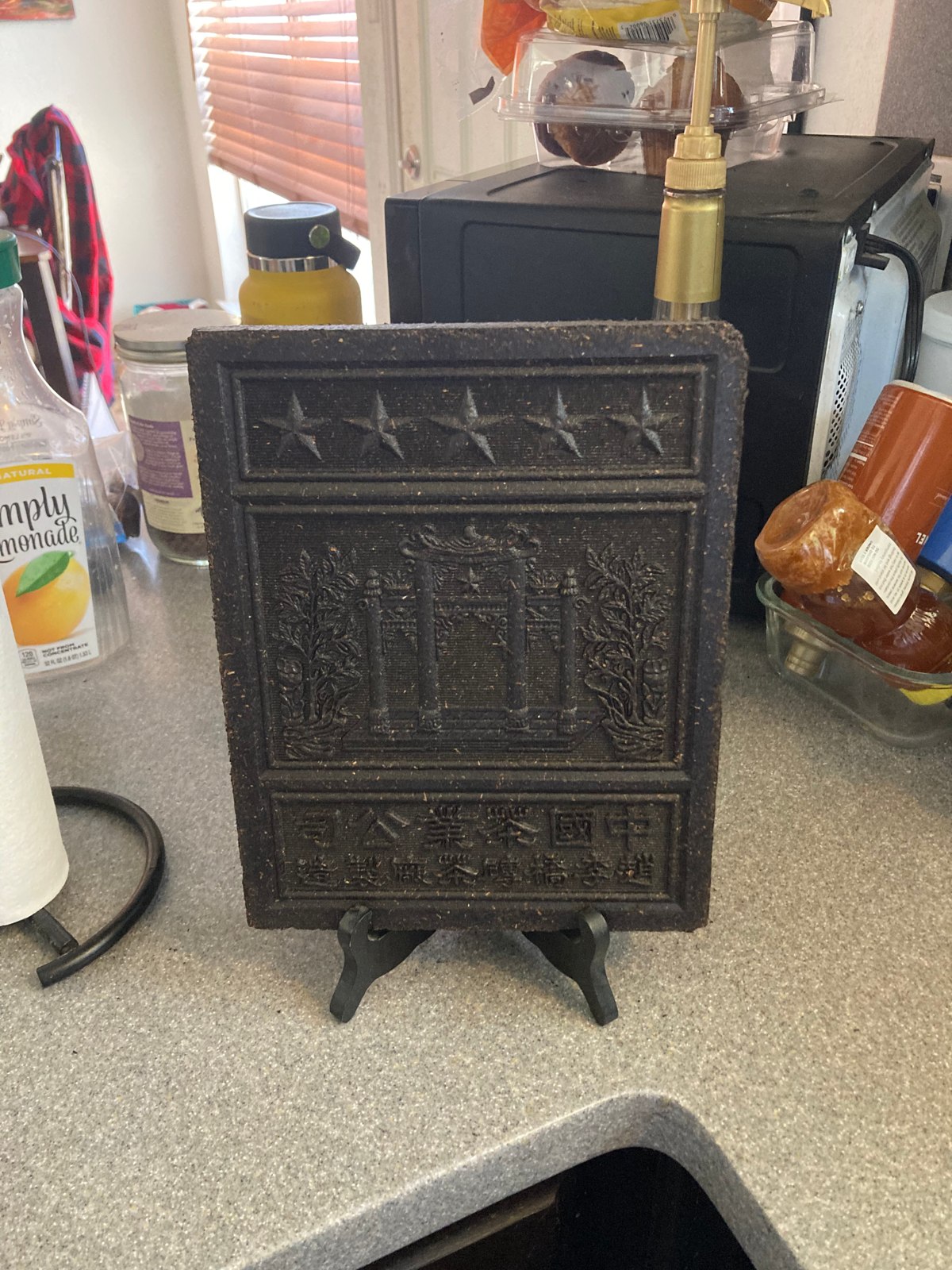
A decorated tea brick on a stand, labeled “A Brick of Chinese Tea” on the original Center page.
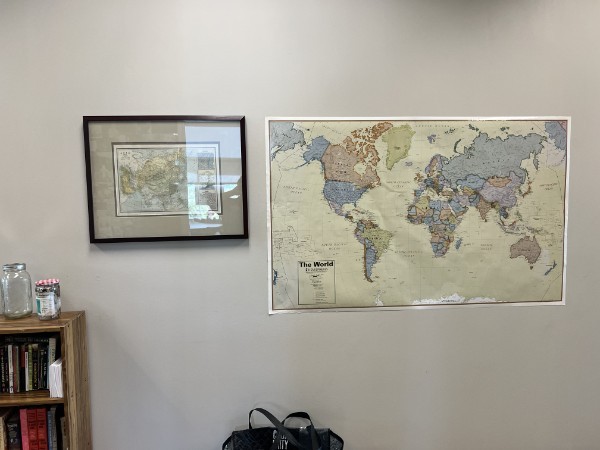
A world map and a framed map displayed beside the Center’s bookshelves.
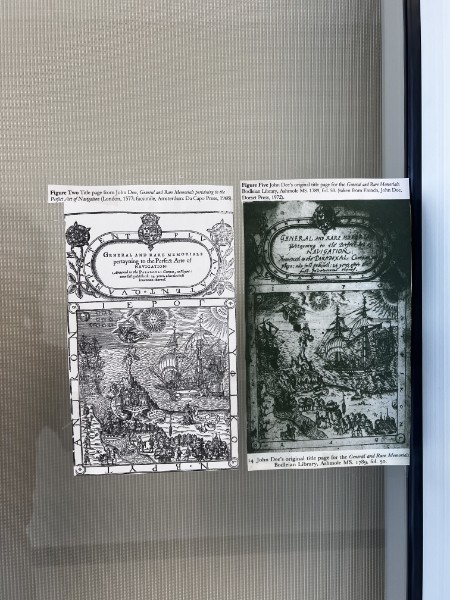
Reproductions of illustrated title pages from works on navigation, displayed as teaching materials.
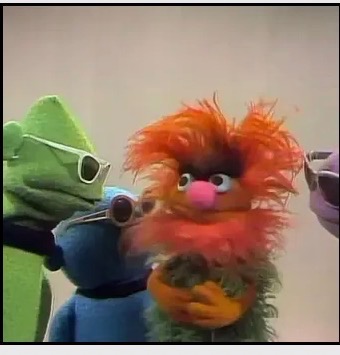
Children’s television is part of cultural history too. Familiar characters open up conversations about learning, media, and childhood.
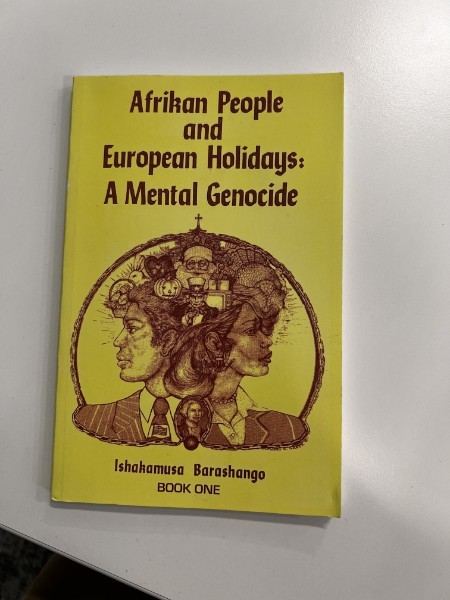
Afrikan People and European Holidays: A Mental Genocide, Book One, by Ishakamusa Barashango, from the collection.
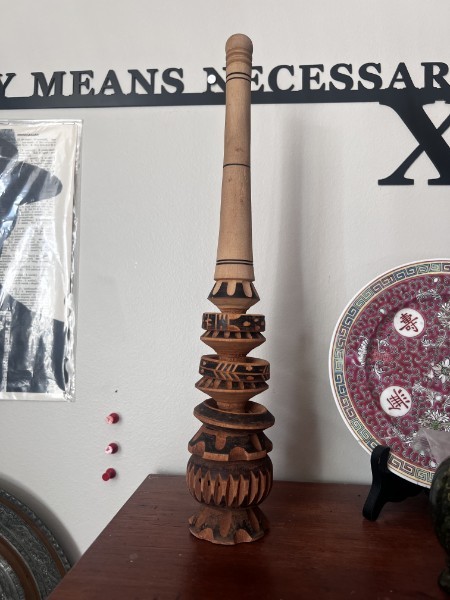
A tall carved wooden artefact displayed beside a decorative plate and a wall quotation.
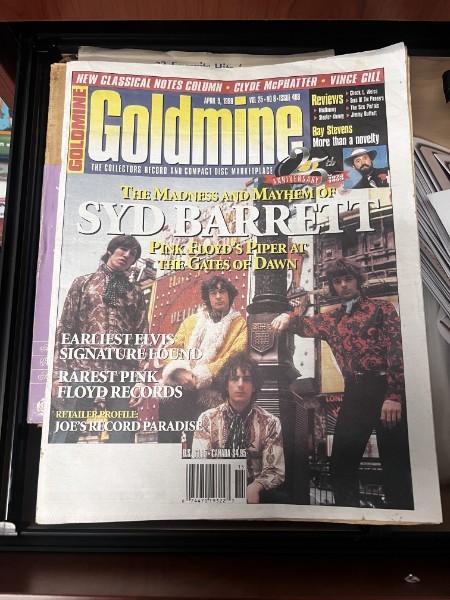
A Goldmine magazine cover featuring Syd Barrett and Pink Floyd, preserved with other periodicals in the collection.
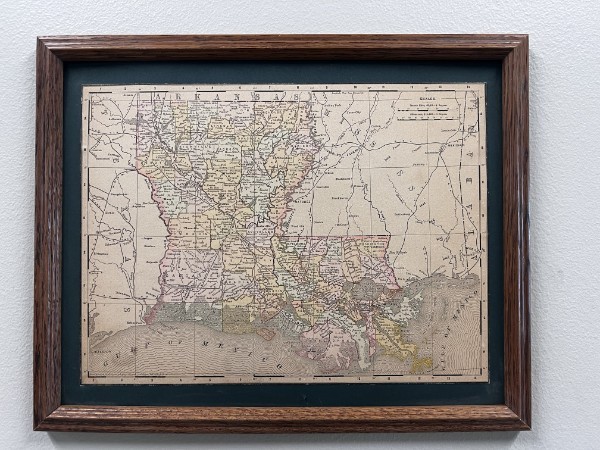
A framed map of Louisiana, identified by the collection as dating to 1893.
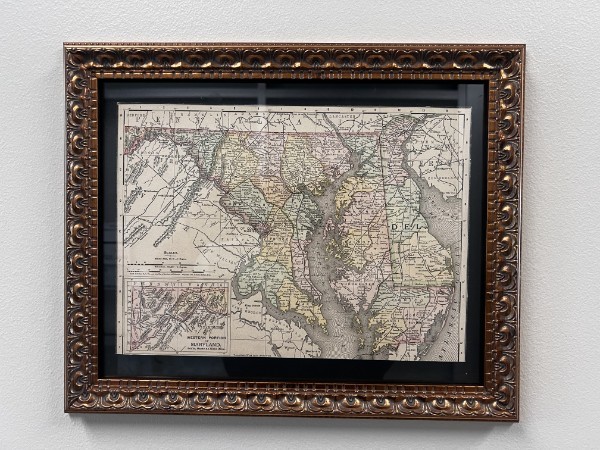
A framed map of Maryland and Delaware, identified by the collection as dating to 1893.
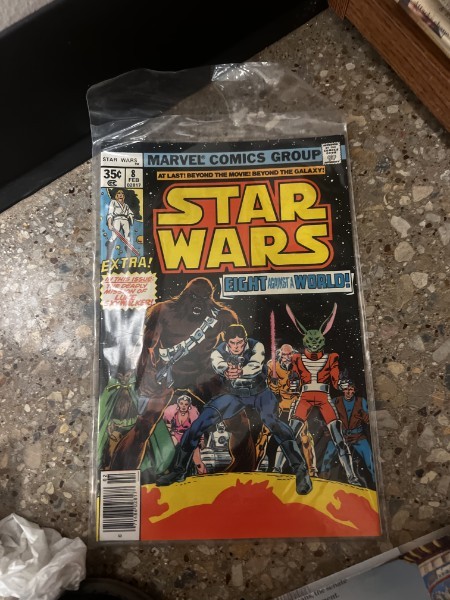
A Marvel Star Wars comic from the Center’s comic-book collection.
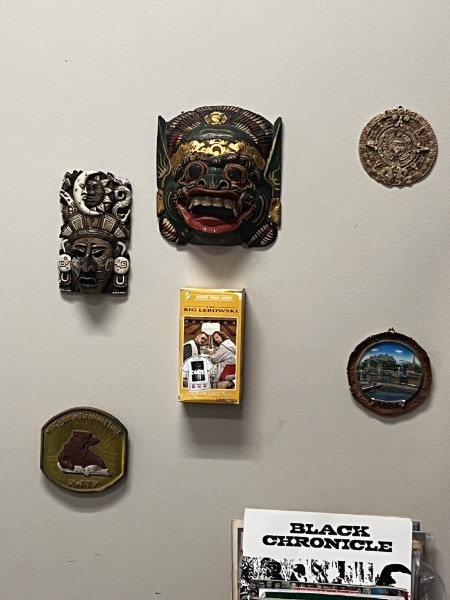
Carved masks, decorative pieces, and popular-culture artefacts share a wall in the Center.
This gallery includes period publications, artefacts, and later commemorative or teaching materials. A photograph opens a line of inquiry; it does not establish an artefact’s full provenance. Dates and descriptions are included where they can be read or confirmed.
LOOK. QUESTION. CONNECT.
Look for the creator, publisher, date, and intended audience.
Notice the language, images, and assumptions that frame its story.
Ask whose perspective is absent, and what other sources could help.
THERE’S A PLACE FOR YOU HERE
Read something unexpected. Start a conversation.
Help bring history to life.